
Surface Hydrokinetic Turbine Technology
MACLEC is pioneering dam-free, reservoir-free, 24×7 renewable hydropower through its commercially proven Surface Hydrokinetic Turbine Technology.
100+ MW
Projects under execution
2,500+ tonnes
CO₂ Emissions Avoided
10,000 TWh
Estimated global hydrokinetic potential
40+ Years
Design Life for Long-Term Performance
$167.8 million
Project portfolio, India and international
 DSIR
Department of Scientific & Industrial Research
DSIR
Department of Scientific & Industrial Research
 Startupindia
Recognized
Startupindia
Recognized
 CEA
Central Electricity Authority
CEA
Central Electricity Authority
 MNRE
Ministry of New & Renewable Energy, Govt. of India
MNRE
Ministry of New & Renewable Energy, Govt. of India
 NITI Aayog
Government of India
NITI Aayog
Government of India
 IIT Roorkee
Research Collaboration
IIT Roorkee
Research Collaboration
 Ministry of Coal India
 Climate Launchpad India
 NASA
NASA iTech, 2020
NASA
NASA iTech, 2020
 WWF
Climate Solver Award, 2018
WWF
Climate Solver Award, 2018
 UNDP
Grassroots Innovation Database, 2020
UNDP
Grassroots Innovation Database, 2020
Click any image below to watch the technology, installation process, and live project footage.
TRL-9 certified by India's Central Electricity Authority, 2024
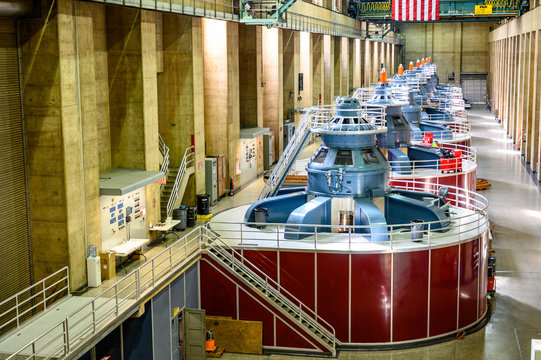
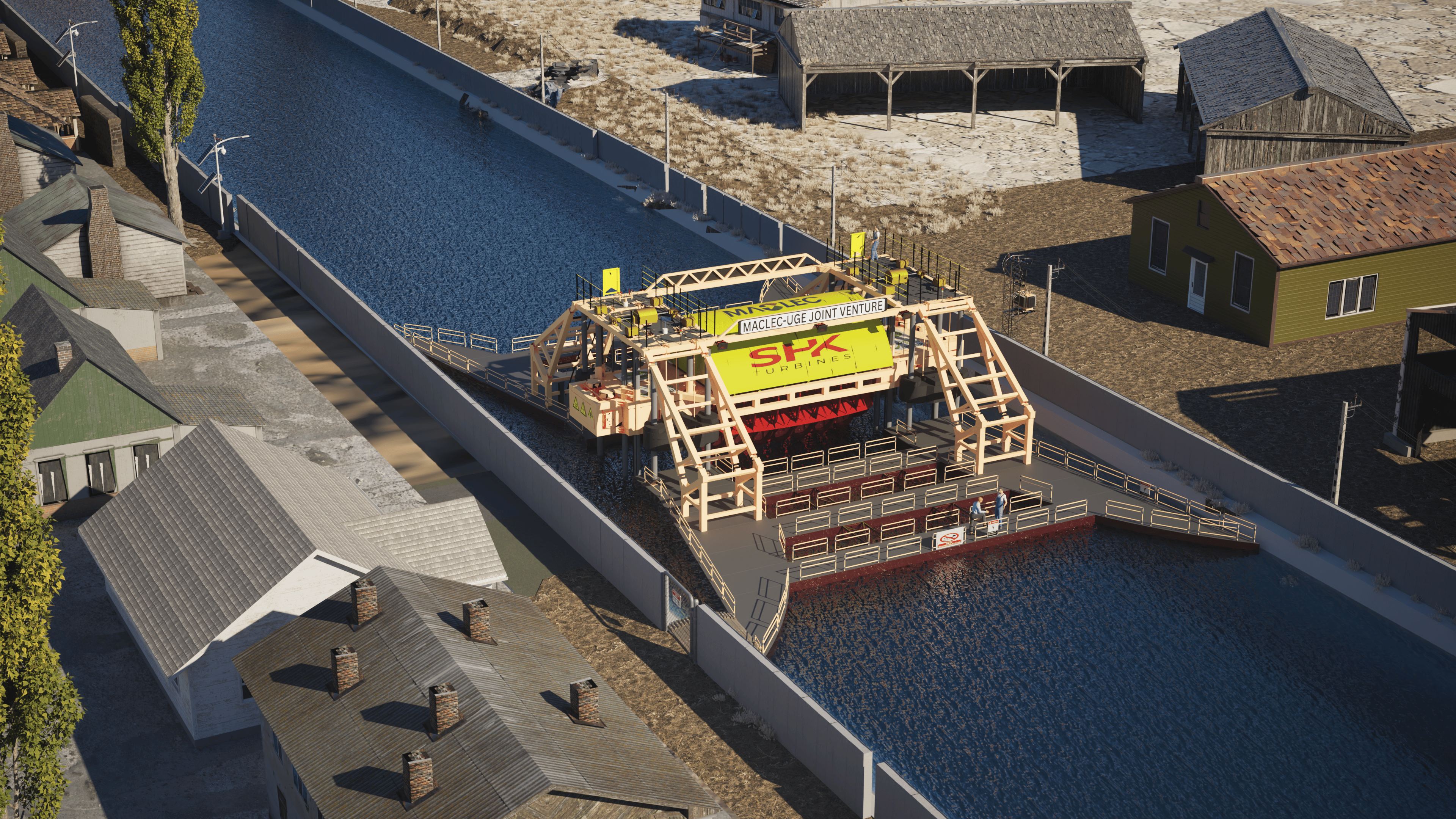
Traditional hydropower depends upon dams, reservoirs, large civil structures and significant environmental intervention. MACLEC's Surface Hydrokinetic Turbine Technology generates renewable electricity directly from the natural kinetic energy of flowing water—without altering the river, canal or waterway.
 Conventional Hydro
 SHKT Technology
 Solar Power
Every installation delivers measurable returns—financial, operational, and environmental—from day one.
No dams, no reservoirs, no diversion channels. Install directly in existing waterways and start generating power within months.
Solar stops at sunset. Wind dies down. Flowing water never sleeps—delivering continuous, predictable power every hour of every day.
No land is drowned. No communities are relocated. Fish and aquatic life can pass through the turbine zone.
Factory-built modules ship ready to install. Minimal on-site civil work means you start earning from power generation within a single financial year.
Begin with a single 50 kW unit and expand incrementally. Add clusters as your energy demand grows—no upfront over-investment.
Built for decades of continuous operation in harsh water environments. Low wear parts mean minimal downtime and maintenance costs.
One technology fits irrigation canals, hydropower tailraces, thermal cooling channels, tidal ports and pumped-storage systems.
Components are largely recyclable. At the end of the 40-year design life, 35–40% of material value can be recovered.
The tariff of ₹3.39/kWh for the 1 MW BBMB Kotla project was adopted by CERC in August 2026.
MACLEC's Surface Hydrokinetic Turbine technology enables clean, continuous and scalable electricity generation from naturally flowing or man-made water streams without dams, reservoirs, diversion structures or major civil construction.
Round-the-clock renewable energy from existing canal networks spanning thousands of kilometres.
Enhancing generation from tail race and head race channels without altering existing plant design.
Recovering energy from cooling water discharge channels—an untapped industrial energy resource.
Decentralised clean power for rural, defence and remote areas without dams or penstocks.
Hydrokinetic opportunities from tidal flows, marine currents and port water movement.
SHK-PSP for long-duration renewable energy storage where conventional PSP is not feasible.
Over the past decade, MACLEC's Surface Hydrokinetic Turbine Technology has progressed from a pioneering research concept into a commercially deployable renewable energy solution recognized by government agencies, regulatory authorities, research institutions and international organizations.
Inaugurated 7 August 2026 by the Hon'ble Chairperson, Central Electricity Authority (CEA), Ministry of Power, Government of India. MACLEC has developed a dedicated, first-of-its-kind double-loop, recirculating hydrokinetic test channel at its New Delhi headquarters to accelerate scientific validation, engineering optimisation, demonstration and commercial deployment of Surface Hydrokinetic Turbine technology. The facility brings flow velocity, depth, turbulence, submergence, blockage, mounting, rotor geometry, generator load control, debris and sediment conditions into a controlled, measurable and visible laboratory environment.
Recognized by the Department of Scientific and Industrial Research (DSIR), Ministry of Science & Technology, Government of India as a Research & Development Institution.
The Ministry of New & Renewable Energy's Small Hydro Power Division issued an Office Memorandum (File No. 19/28/2024-SHP, dated 9 December 2024) forwarding the Central Electricity Authority's recognition of Surface Hydrokinetic Turbine (SHKT) technology under the Hydro Category, directing all State Implementing Agencies and Departments responsible for Small Hydro Power development to consider it for necessary action.
January 2024 — CEA reviewed MACLEC's upgraded field data and design changes against the 2021 Committee Report. The 3×5 kW HKT installation at Ramnagar, Uttarakhand has operated across the full range of expected conditions for two years. Consequently, TRL has been upgraded from 6–7 to Level 9. The letter also confirms replicability across canals, rivers, streams, cooling water channels, tidal rivers, and ocean sites subject to site-specific feasibility.
In a landmark directive dated 20 November 2024, the Central Electricity Authority formally ruled that Surface Hydro Kinetic Turbine Technology shall be considered under the Hydro category. The decision follows MACLEC's formal request (Letter MTPL/24/671, 28 October 2024) and a comprehensive review of the CEA Committee Report (October 2021), the TRL-9 field validation of the 3×5 kW Ramnagar installation (CEA Letter 10/3/HETD/2024, 4 January 2024), and global literature on hydrokinetic deployments. The memorandum establishes that HKT systems — whether operating at kilowatt or megawatt scale — currently fall within the Small Hydro classification (up to 25 MW), while explicitly preserving their place within the broader Hydro category as technology and capacity evolve.
August 2021 — Following a video conferencing meeting on 03.08.2021 under the chairmanship of Secretary (Power), CEA issued an Office Memorandum constituting a Committee headed by Member (Hydro), CEA to study the concept and commercial applications of Hydro Kinetic Turbines developed by MACLEC. The Committee comprised representatives from CEA, MNRE, NHPC, THDC, and IIT Roorkee, with a mandate to submit its report within 45 days.
A Committee headed by Member (Hydro), CEA — comprising representatives from CEA, MNRE, NHPC, THDCIL and IIT Roorkee — studied the concept and commercial applications of MACLEC's Surface Hydro Kinetic Turbine. Five meetings were held with presentations from MACLEC, GKinetic Energy (Ireland) and Imp Powers. The report covers technology concept, potential assessment, cost analysis, tariff framework and a roadmap for pilot installations.
12 Nov 2021 — The Ministry of Power directed all central power utilities (NTPC, NHPC, THDCIL, SJVNL, NEEPCO, BBMB) to take up technology demonstration projects of Hydro Kinetic Turbines developed by MACLEC. The directive follows the CEA Committee report headed by Member (Hydro) and requests CPSUs to install suitable capacities across varying operating environments to promote R&D.
Maclec Technical Project Laboratory was awarded First Prize in the Air Management Category at the Swachh Bharat Grand Program 2018, under the Department for Promotion of Industry and Internal Trade (DPIIT), Ministry of Commerce & Industry, Government of India, recognizing an early innovation that absorbed vehicular pollutants and compressed the surrounding air for electric power production.
May 2015 — Dr. R.P. Saini at AHEC, IIT Roorkee conducted independent field testing of MACLEC's VARUN-I (undershot water wheel) and VARUN-III (conical spiral) hydrokinetic turbines at the Ramganga Dam tail race channel, Kalagarh. VARUN-I achieved 126 W at 1.2 m/s water velocity; VARUN-III achieved 132 W at 1.3 m/s — validating early turbine performance in live flow conditions.
Dr. R.P. Saini, MNRE Chair Professor (Dept. of Hydro & Renewable Energy), confirmed in a Sept 2020 letter that MACLEC is the industry partner in a UJVN-sponsored R&D project to develop the 100 kW VARUN-III surface hydrokinetic turbine. The prototype was tested on the Upper Ganga Canal, and the letter validates the novelty of MACLEC's partial-submergence approach for harnessing surface water velocity.
MACLEC's pioneering work in hydrokinetic energy has been acknowledged and showcased by leading international innovation platforms, government agencies and sustainability initiatives worldwide.
"Innovation Alone Does Not Create Impact. Validation Creates Trust."